Smell gas or hear a CO alarm? Do not wait for an HVAC appointment. Get everyone outside, then call 911 or SDG&E from outside the house. Do not flip switches or light anything on the way out.
Signs your heater needs attention
- No heat at allThe thermostat calls for heat and nothing happens, or the furnace starts and shuts right back off.
- Blowing cold airThe fan runs but the burners never light, or the air turns cold partway through a cycle.
- A smell that lingersA dusty smell on the first run of the season is normal for a short while. A burning or electrical smell that sticks around is not.
- Short cyclingThe heat turns on and off every few minutes, which often points to a dirty filter, a sensor or an overheating problem.
- Bangs, booms or squealsA loud boom when the burners light, or a squeal from the blower, means something needs attention soon.
- Yellow or flickering flameA gas furnace flame should be mostly blue. A lazy yellow flame can mean poor combustion and should be checked.
Common furnace problems
Most no-heat calls come down to a short list of parts. A dirty flame sensor makes the furnace light and then shut off after a few seconds. A cracked hot surface igniter means the burners never light. A clogged filter lets the furnace overheat until a safety switch shuts it down. Other usual suspects are the pressure switch and inducer motor, the blower motor or its capacitor, a blocked condensate line on high-efficiency furnaces, and thermostat wiring.
The serious one is a cracked heat exchanger, which can let combustion gases, including carbon monoxide, into the air you breathe. If we find one, we will show it to you and explain your options. In most cases it means replacing the furnace rather than repairing it.
Heat pump heating problems
If your home is heated by a heat pump, a few things are normal that surprise people. The outdoor unit will sometimes stop, make a whoosh and give off a cloud of steam. That is the defrost cycle, and it is fine. The air from the vents also feels warm rather than hot, because a heat pump delivers steady, gentler heat than a gas furnace. Problems worth a call include an outdoor unit that stays iced over, a system stuck in cooling mode (often the reversing valve or its controls), or heat that only comes from the backup electric strips, which shows up fast on the SDG&E bill.
Getting ready for the first cold night
Heaters here can sit unused for most of the year, so the first cold night of the season is when problems show up. A few minutes in October or early November saves a no-heat call later:
- Run the heat for a few minutes on a mild afternoon, before you actually need it. If it does not light or shuts off quickly, you have time to get it fixed.
- Replace the filter. A filter that sat in the system all summer while the AC ran is often loaded with dust.
- Expect a dusty smell the first time. Dust burning off the burners or heat strips is normal for a short while.
- Test your CO alarms and replace any that are past their date.
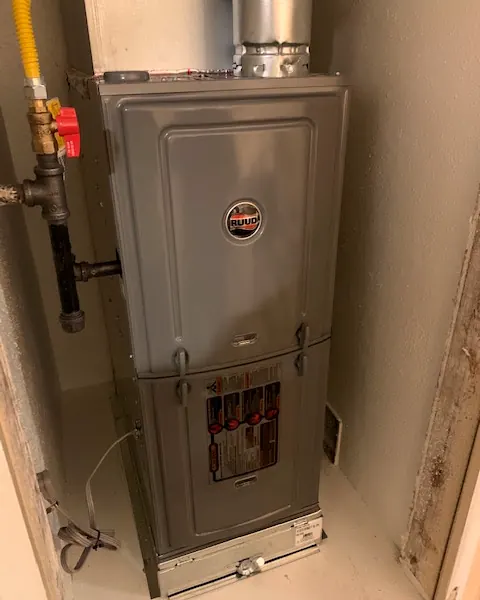
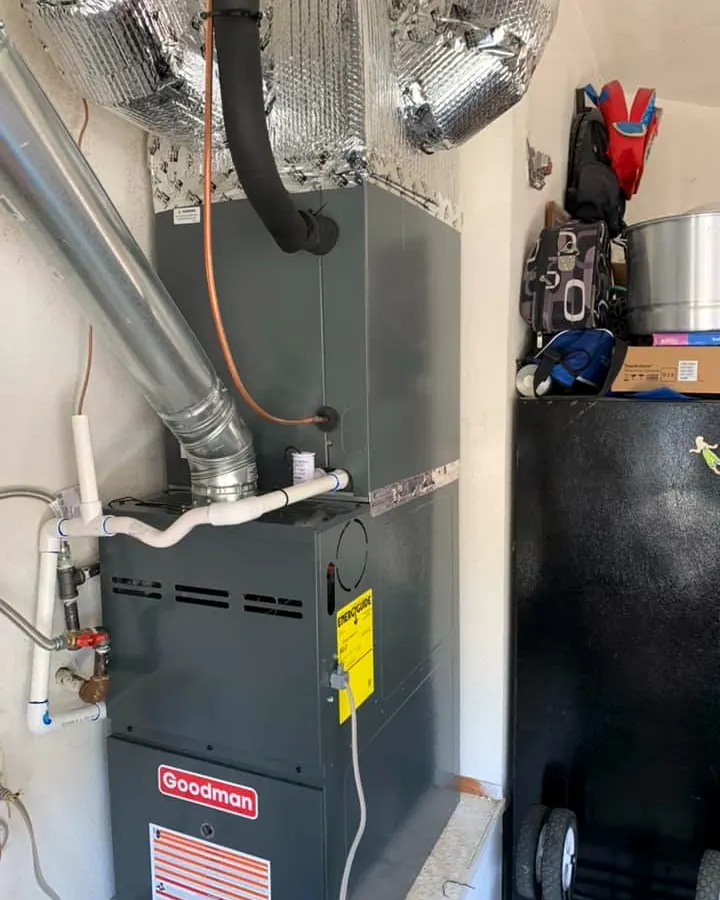
- Clear the space around the furnace. Garage and closet furnaces end up surrounded by storage, and a gas furnace needs air to burn safely.
- Heat pump? Switch the thermostat to Heat or Auto, and make sure leaves and yard clutter are not blocking the outdoor unit.
Older homes and wall furnaces
Many older San Diego County homes were built with a wall furnace or floor furnace instead of a ducted system. These can often be repaired, but parts for very old units get hard to find, and they only heat the area near them. If yours is near the end of its life, a ductless mini-split or a heat pump can give you heating and cooling in one system. See ductless mini-splits.
Repair or replace your furnace?
- Age: many gas furnaces last roughly 15 to 20 years. Past that, repairs tend to stack up.
- Safety: a cracked heat exchanger almost always means replacement.
- Repeat breakdowns: a third repair in two winters is a sign.
- AC plans: if you also want AC, replacing both together, or switching to a heat pump, often makes sense.
Quick checks before you call
- Thermostat set to Heat, set above the room temperature, with fresh batteries if it uses them.
- The furnace power switch (it looks like a light switch on or near the unit) is on, and the breaker is not tripped.
- The air filter is not clogged.
- The furnace door panel is fully closed. A safety switch keeps the furnace off if it is loose.
If it's time to replace
When a furnace is near the end of its life, it is worth looking at the whole system. If you also want AC, replacing both together, or switching to a heat pump that heats and cools, is often the cleanest fix. When the new system includes a new AC, here is what comes with it:
What comes with a new AC
- Free smart thermostat or free first year of maintenance with every new AC system
- 10-year parts and 10-year labor warranty on new systems
Choose the free smart thermostat or the free first year of maintenance. Offers apply to new AC system installs by Millenial Air Conditioning. Ask for details with your quote.
Or call or text (619) 765-9611
Heating repair from Eastlake to La Jolla
We handle heating repair in Chula Vista (including Eastlake, Otay Ranch and Rolling Hills Ranch), Poway, Del Mar and La Jolla. Inland areas like Eastlake, Rolling Hills Ranch and Poway get noticeably colder at night than homes near the coast, so heaters there work harder from late fall through early spring. A quick check in the fall catches most problems before then.