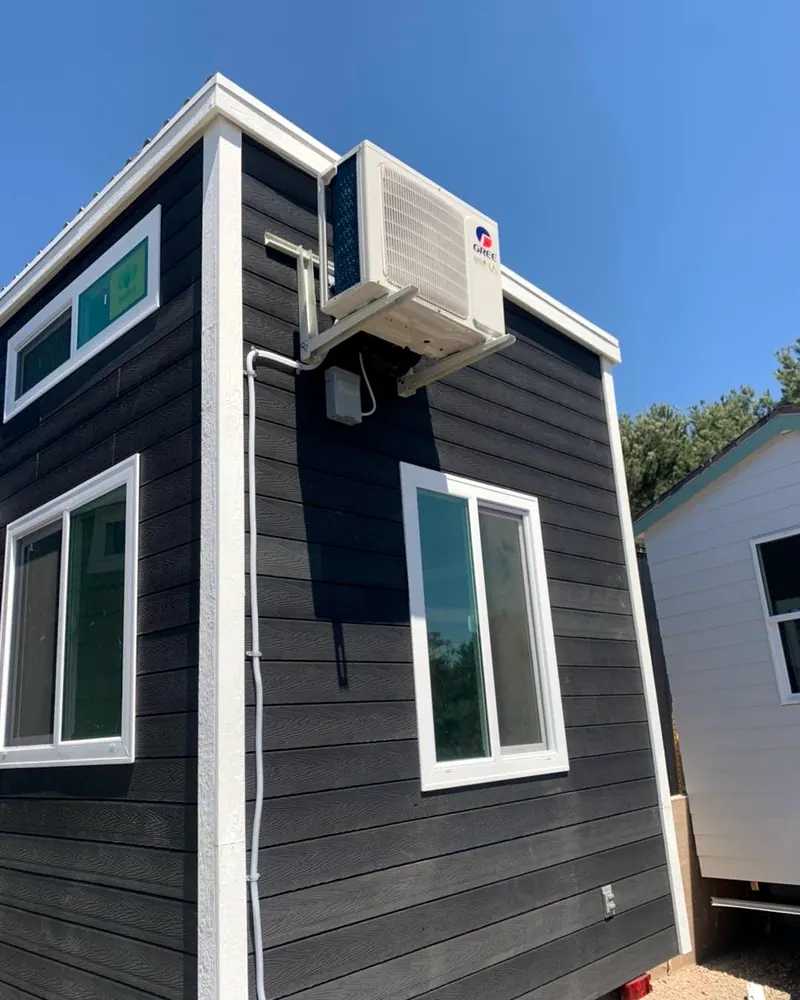
How a heat pump works
A heat pump does not burn anything to make heat. It moves heat from one place to another, the same way your refrigerator pulls heat out of the food and releases it into the kitchen. In summer it works like a regular AC, pulling heat out of your house and releasing it outside. In winter a reversing valve flips the process, and it pulls heat out of the outdoor air and brings it inside.
Even cool winter air holds plenty of heat to work with. Because moving heat takes much less energy than creating it, a heat pump in mild weather often delivers two to three times more heat energy than the electricity it uses.
Heat pump or AC plus a furnace?
Most homes here have a central AC paired with a gas furnace. When one or both are due for replacement, this is the comparison that matters:
| Compare | Heat pump | AC plus gas furnace |
|---|---|---|
| Cooling | Works the same as a central AC | Central AC |
| Heating | Moves heat in from the outdoor air, using electricity | Burns natural gas |
| Equipment | Outdoor unit plus an indoor air handler | Outdoor unit, indoor coil and a furnace |
| Fuel | Electricity only | Electricity and gas |
| How the heat feels | Steady, warm air over longer cycles | Hotter air in shorter bursts |
| Best fit | Mild winters, solar, replacing both systems at once | A newer furnace you want to keep, or a preference for gas heat |
In San Diego's mild climate, a heat pump is usually the more natural fit when both systems are due. If your furnace is fairly new and in good shape, adding a new AC to it can still be the simpler choice. We will lay out both for your house.
Why heat pumps fit San Diego
Heat pumps are at their most efficient when winters are mild, and San Diego winters rarely get anywhere near freezing. That makes Chula Vista, Poway, Del Mar and La Jolla close to ideal territory. Other reasons homeowners here choose them:
- One system instead of two. When the AC and the furnace are both getting old, a heat pump replaces both.
- No gas needed for heat. Useful if you want to move away from gas or add heating where there is no gas line.
- Pairs well with solar. If you have rooftop solar, your heating and cooling can run on power you already produce.
- State support. California is actively encouraging heat pumps, and rebate programs come and go, so ask what applies when you get your quote.
Types of heat pumps
Ducted split heat pump
Outdoor unit plus an indoor air handler that uses your existing ducts. The usual choice when replacing a central AC and furnace.
Ductless mini-split
A heat pump with indoor heads and no ducts. Great for older homes, additions and ADUs. More on mini-splits.
Package heat pump
Everything in one cabinet on a roof or slab. Common on small commercial buildings and some homes. Light commercial HVAC.
Dual fuel
A heat pump paired with a gas furnace for backup heat. Less common here since our winters are so mild, but an option if you want to keep gas.
Is a heat pump right for your home?
A heat pump is usually a strong fit if your AC or furnace needs replacing anyway, if you want heat in rooms that never had it, or if you have solar. Two things to check before deciding:
- Electrical capacity. Some older homes need an electrical panel or circuit upgrade to add a heat pump. We check this before you commit.
- Ductwork condition. A ducted heat pump is only as good as the ducts it feeds. Leaky or undersized ducts should be fixed or the system sized around them.
Living with a heat pump
A few habits get the most from a heat pump. Keep the thermostat at a steady setting instead of big setbacks overnight, because a large jump in the morning can bring on the less efficient backup heat. Expect the air from the vents to feel warm rather than hot. Do not worry when the outdoor unit steams in winter, since that is the defrost cycle. And because it runs in both summer and winter, a heat pump benefits from maintenance twice a year, in spring and fall. A smart thermostat set up for heat pumps makes most of this automatic.
Heat pumps from Eastlake to La Jolla
We install and replace heat pumps in Chula Vista (including Eastlake, Otay Ranch and Rolling Hills Ranch), Poway, Del Mar and La Jolla. In two-story homes in Eastlake and Otay Ranch, ask about zoning or variable-speed equipment for a hot upstairs. Near the coast in Del Mar and La Jolla, ask about outdoor units with corrosion-resistant coils, since salt air is hard on equipment.