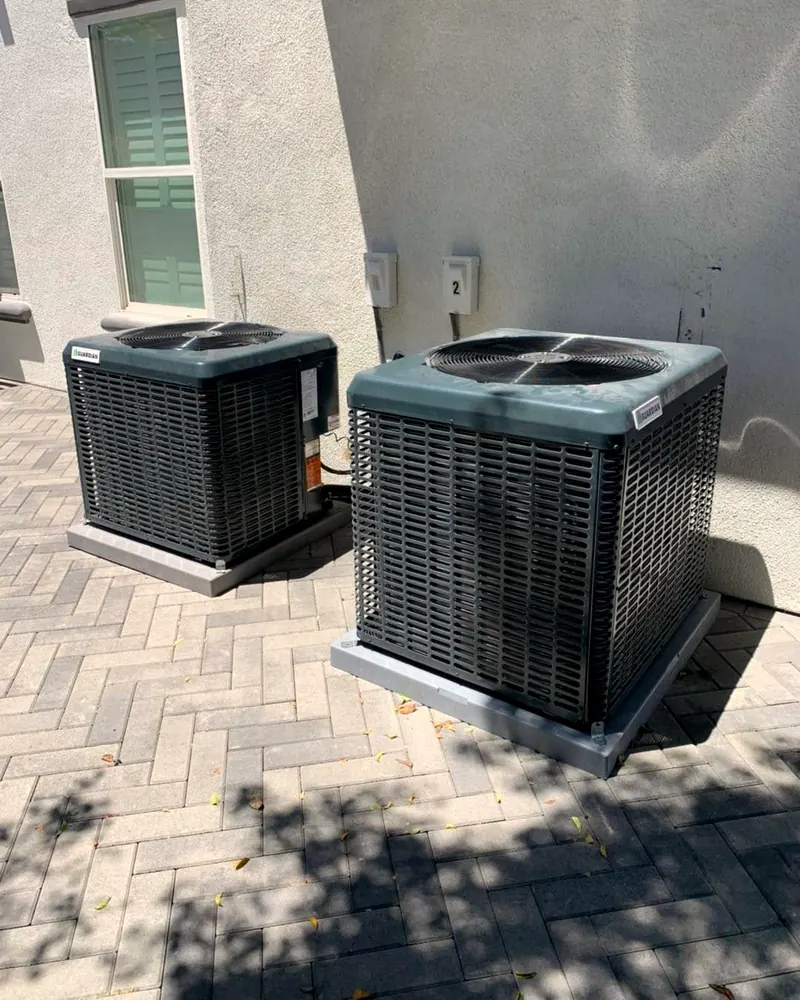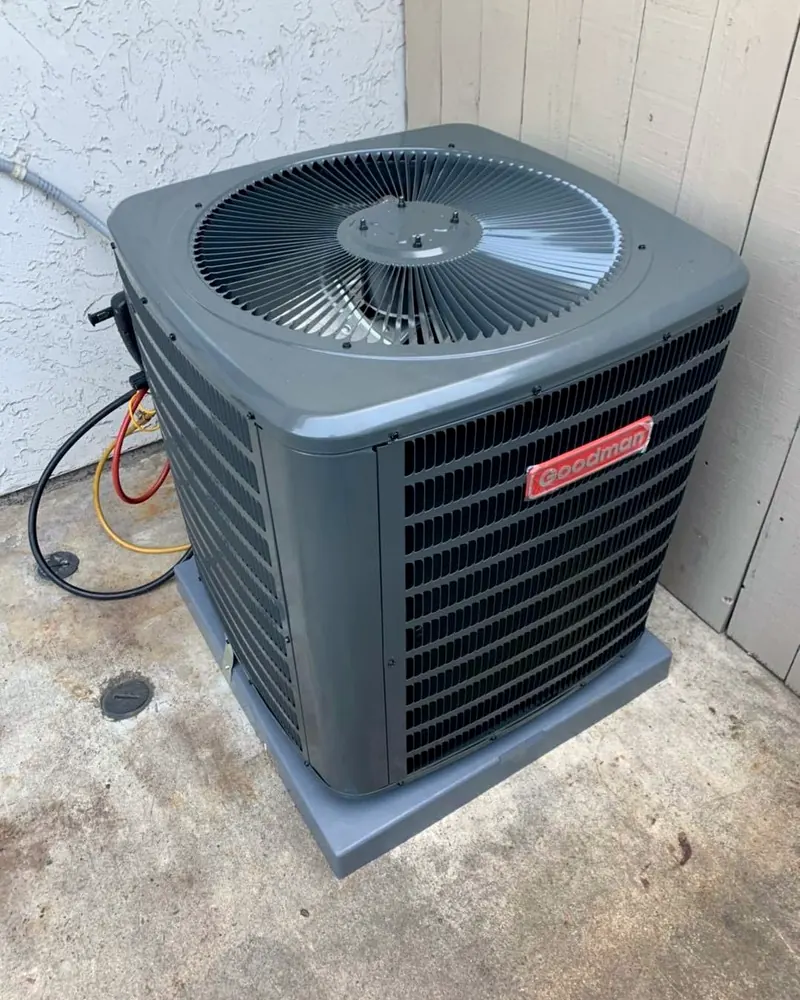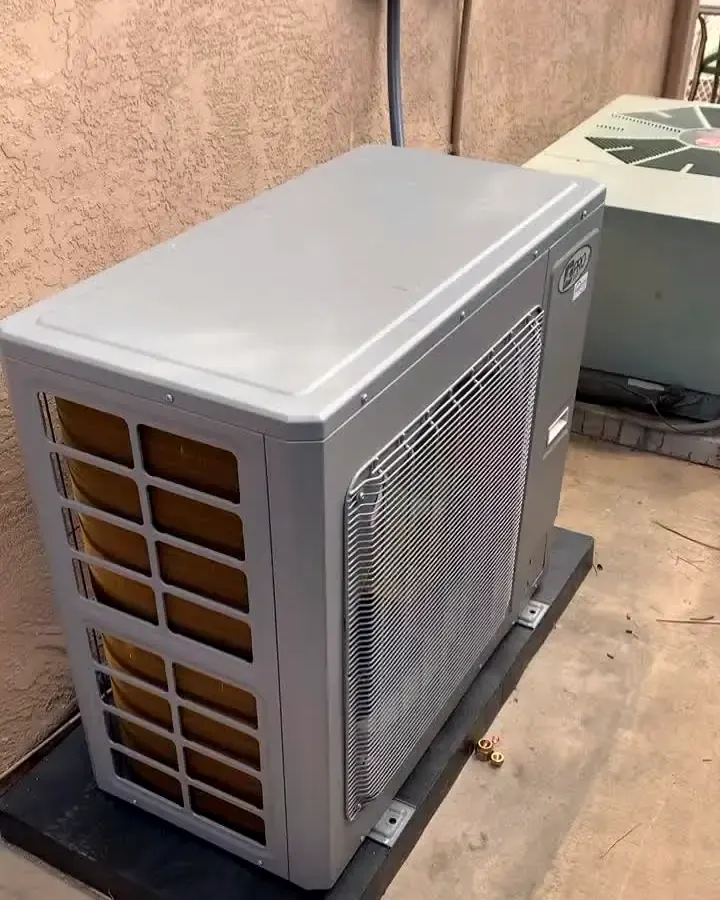
What every new AC system includes
Every new AC system we install comes with a 10-year parts and 10-year labor warranty on the new system, plus your pick of a free smart thermostat or a free first year of maintenance. The equipment and installation are quoted for your home, and the details come with your quote.
- Equipment and installation
- Quoted for your home
- Smart thermostat or first year of maintenance (your pick)
- Free
- Parts warranty
- 10 years
- Labor warranty
- 10 years
Signs it's time for a new AC
Replacing an AC is rarely an emergency decision until it suddenly is. These are the usual signs that the next repair may not be the best use of your money:
- It's around 15 years oldMany central ACs last somewhere around 12 to 15 years. Past that, breakdowns and efficiency losses tend to stack up.
- Repairs keep coming backA second or third repair in two summers usually means the system is wearing out as a whole, not one part at a time.
- R-22 with a leakR-22 has not been made or imported in the US since 2020, so recharging a leaking R-22 system gets expensive fast.
- Bills creep upHigher SDG&E bills with the same habits can mean an older system is losing efficiency.
- Some rooms never coolA hot upstairs or a system that runs all afternoon and still falls behind can be a sizing or airflow problem a new system can fix.
- The house never had ACMany older San Diego County homes were built with only a furnace or a wall heater. Adding AC is one of the most common reasons to replace.
Choosing the right system
The right system depends on your house, not on what is easiest to sell. These are the main options:
Central AC with your furnace
An outdoor condenser and an indoor coil that pair with your existing furnace and ducts. The classic setup, and often the simplest swap.
Heat pump system
Looks like a central AC, but it also heats. In our mild climate it can replace both the AC and the furnace. More on heat pumps.
Ductless mini-split
No ducts needed. A good fit for homes without ductwork, additions, ADUs or a few hot rooms. More on mini-splits.
Package unit
Everything in one cabinet on a roof or a slab. Common on some homes and on most small commercial buildings. Light commercial HVAC.
Sizing to the house, not the square footage
An AC that is too big cools the house fast, shuts off, and starts again a few minutes later. It never runs long enough to pull moisture out of the air, so the house feels clammy, and the constant starting wears parts out sooner. A system that is too small runs nonstop on hot days and still falls behind. Proper sizing looks at insulation, windows and which way they face, ceiling height, shade and the condition of the ducts. The industry method is a load calculation, often called a Manual J. It is also where problems like a two-story Eastlake or Otay Ranch home with a hot upstairs get caught, which might call for zoning or a separate system instead of a bigger one.
SEER2 in plain English
Cooling efficiency is rated in SEER2, and heat pump heating efficiency in HSPF2. The higher the number, the less electricity the system uses for the same comfort. California is in the Department of Energy's Southwest region, so since 2023 a new split-system central AC installed here has to be at least 14.3 SEER2 for most home sizes (13.8 for the largest). Higher-efficiency, variable-speed systems cost more up front, and whether that pays off depends on how much you cool. A home in eastern Chula Vista or Poway that runs the AC all afternoon from July to October gets more out of it than a coastal home that cools a few days a year. We will show you both and tell you honestly which makes sense.
New refrigerants: what R-454B and R-32 mean for you
Under the federal AIM Act, new home AC and heat pump systems have to use refrigerants with a much lower climate impact than R-410A. Since January 1, 2026 that applies to new split systems being installed, so most new equipment now runs on R-454B or R-32. What that means for you:
- Your current system can still be repaired. R-410A is still made for servicing existing systems, but production is being cut on a federal schedule. R-22 is not made at all.
- Indoor and outdoor parts have to match. A new R-454B or R-32 outdoor unit needs an indoor coil or air handler built for that refrigerant, so a full replacement usually means both.
- They are rated mildly flammable (A2L). The new equipment is built and installed to updated safety standards, and many new indoor units include a refrigerant leak sensor.
- The copper lines get checked. Existing lines can sometimes be reused when they are the right size, in good shape and the manufacturer allows it. Otherwise they are replaced.
Permits and Title 24
Do I need a permit to replace my AC in California?
In most cases, yes. The California Energy Commission says replacing a central AC, heat pump or furnace requires a building permit, and the work has to meet Title 24, Part 6, the state's Building Energy Efficiency Standards. Depending on the job and the climate zone, some of the required tests have to be verified by an independent HERS rater before the permit is closed out.
The permit comes from your city. In Chula Vista, Poway and Del Mar that is each city's own building department. La Jolla is part of the City of San Diego, so permits there go through the City of San Diego's Development Services Department. The inspection is an independent check that the system was installed safely and to code, and unpermitted HVAC work can come up when you sell the house. Ask us how the permit is handled for your job, and be wary of anyone who offers to skip it.
Repair or replace?
If your AC still runs, replacing it is not automatic. Here is how the decision usually breaks down:
| Look at | Lean toward repair | Lean toward replacing |
|---|---|---|
| Age | Under about 10 years | Around 15 years or older |
| Refrigerant | R-410A with no leak | R-22, or a leak that keeps coming back |
| The repair | A small part like a capacitor or a drain | A compressor or coil on an older system |
| History | First real problem in years | Several repairs in two summers |
| Comfort | The house cools evenly | Hot rooms, clammy air, nonstop running |
| Bills | Steady year to year | Climbing with the same habits |
A quick check is the $5,000 rule: multiply the system's age by the repair cost, and if it comes out over $5,000, replacing is usually the better buy. Our repair or replace guide walks through it. If a repair makes more sense, we will tell you that too. See AC repair.
What installation day looks like
- Remove the old equipment. Refrigerant is recovered properly, as federal rules require, before anything is disconnected.
- Set the new equipment. Outdoor unit on a level pad, new indoor coil or air handler, refrigerant lines and the condensate drain.
- Electrical and controls. Disconnect, wiring and the thermostat, including a smart thermostat if that is your pick.
- Vacuum, charge and test. The system is evacuated, charged and checked while it runs.
- Walk-through. We show you how everything works and how to look after it.
Getting a quote you can compare
A useful quote lists the exact equipment (brand, model and size), what is included (refrigerant lines, pad, electrical, thermostat, permit) and the total. That way you can compare quotes fairly instead of comparing one company's bare equipment price with another's full install. Utility and state rebate programs for heat pumps and high-efficiency equipment change often, so ask what applies when you get your quote.