What is a mini-split?
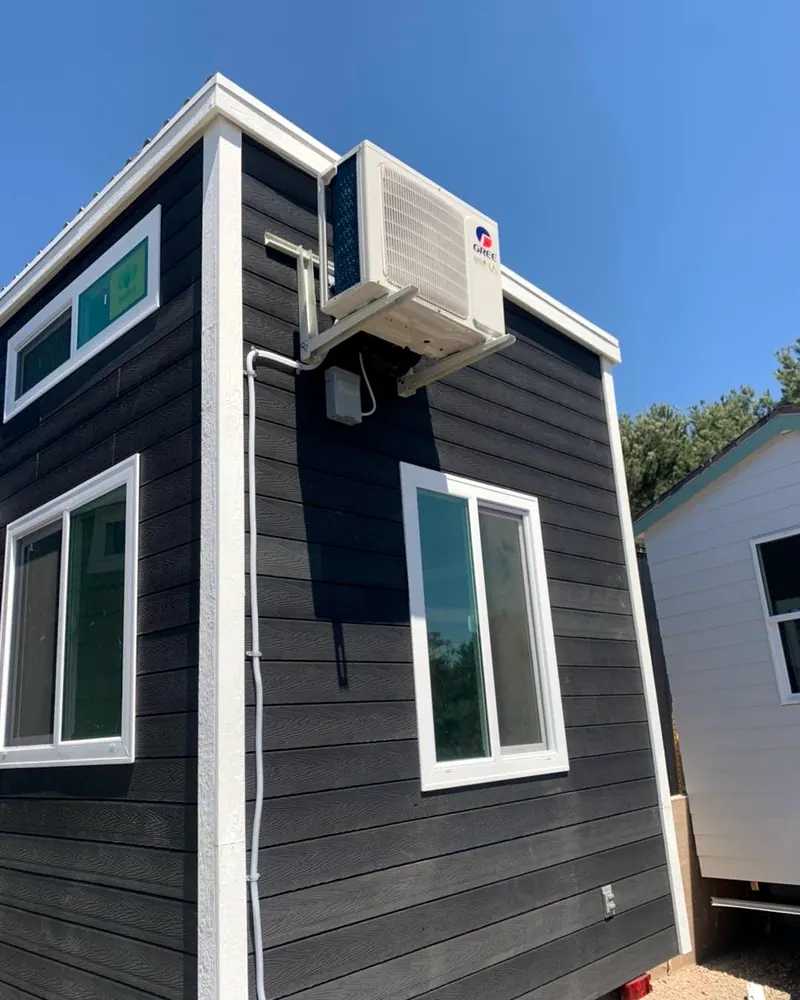
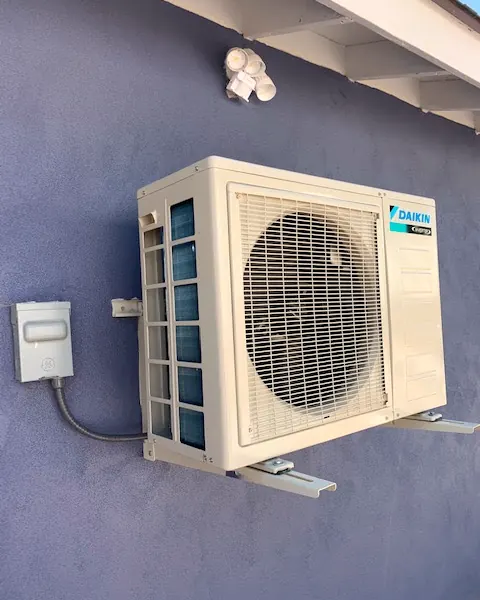
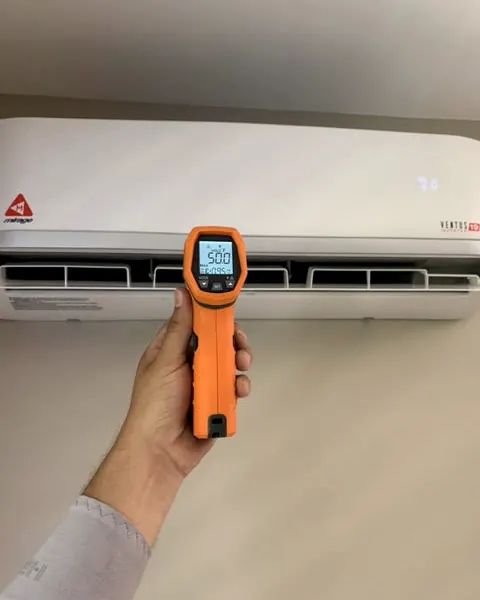
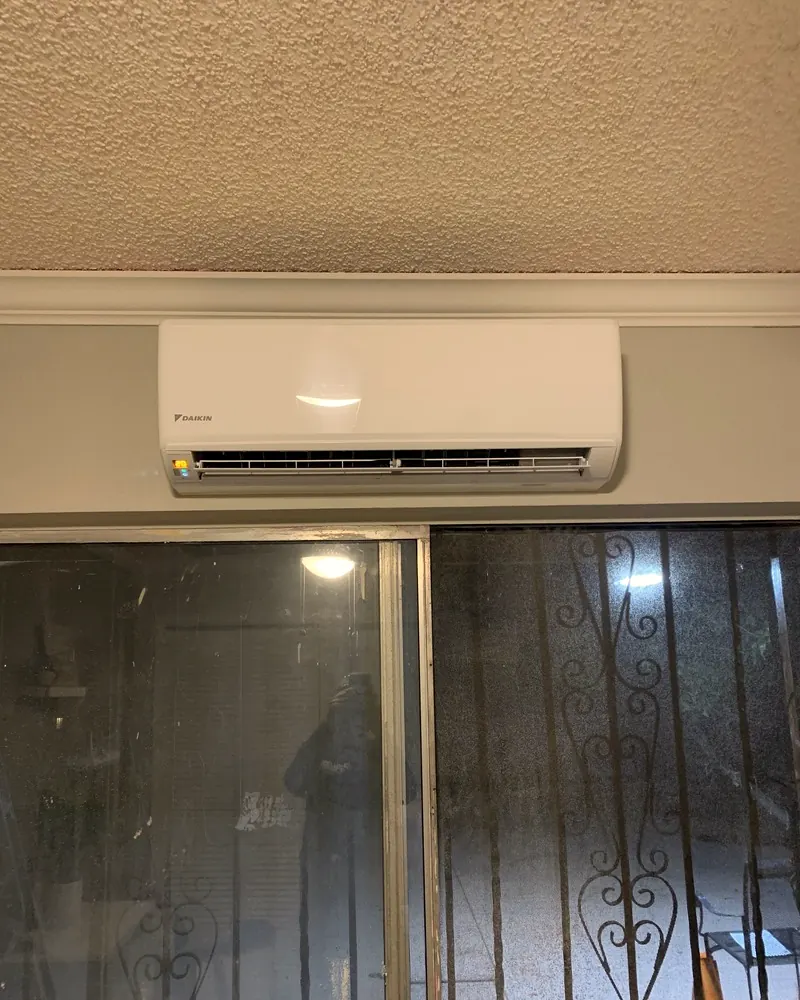
A mini-split has two parts: an outdoor unit with the compressor, and one or more indoor units (usually called heads) mounted on a wall, in a ceiling or hidden out of sight. They are connected by a small bundle of refrigerant lines, wiring and a drain that passes through a hole about three inches wide. No full duct system, no attic crawling, and very little disruption inside the house.
Each indoor unit has its own controls, so every room can be set to its own temperature. Most mini-splits use an inverter compressor that speeds up and slows down instead of switching fully on and off, which keeps temperatures steady and saves energy. And because a mini-split is a heat pump, it heats as well as cools.
Where does a mini-split make sense?
- Homes without ductsOlder homes with wall heaters or no AC at all. Add cooling and better heat without tearing into walls.
- The room that never coolsThe upstairs bedroom, the west-facing office, the converted garage. Fix one room without replacing the whole system.
- ADUs and granny flatsA separate, efficient system for a backyard unit, so it does not have to share the main house's HVAC.
- Additions and sunroomsNew space the existing system was never sized for.
- Garages, studios and workshopsBackyard offices, garage gyms and hobby rooms that need comfort only when they are in use.
- Replacing wall furnacesSwap an old wall or floor furnace for heating and cooling in one quiet unit.
Ductless or ducted mini-split?
"Mini-split" covers more than the wall units most people picture. One of our Google reviews is from a customer who had a ducted mini-split put in his ADU. Here are the indoor styles to choose from:
Wall-mounted
The most common and usually the most affordable style. Mounted high on a wall, quiet and easy to service.
Concealed ducted
A slim unit hidden in a ceiling, attic or closet that feeds a few short ducts. Nearly invisible, and a clean fit for an ADU or a small home.
Ceiling cassette
Sits flush in the ceiling and blows air in several directions. A cleaner look for open rooms.
Floor console
Mounted low on the wall, often where a wall heater used to be. Good under windows and in rooms with sloped ceilings.
Single-zone or multi-zone?
A single-zone system is one outdoor unit and one indoor unit, perfect for a single room, an ADU studio or a garage. A multi-zone system connects several indoor units to one outdoor unit, so you can condition a few rooms, or a whole small house, from one outdoor unit. Each room still has its own temperature setting. For larger homes, two single-zone systems or a mix of ducted and ductless sometimes works better than one big multi-zone. We will lay out the options.
How long does a mini-split last?
A mini-split lasts about as long as a central heat pump, often 15 years or more when the filters and coils are kept clean. What shortens its life is neglect: clogged filters, a dirty indoor coil and blower wheel, and on the coast, salt buildup on the outdoor coil. Rinse the washable filters every month or two when it is running a lot, keep plants a couple of feet away from the outdoor unit, and have the indoor unit professionally cleaned every year or two so dust and moisture do not cause musty smells.
Why a licensed installer matters
Mini-splits are sold as DIY kits, and some homeowners do part of the work themselves. Another of our Google reviews is from a customer who installed his own two mini-splits and had us run the electrical and check for leaks. The parts of the job that decide whether a system lasts are the ones you cannot see:
- Tight connections and a deep vacuum. Moisture or a slow leak at a flare fitting can ruin a compressor.
- Refrigerant rules. Federal law requires EPA certification to handle refrigerant on standard systems.
- Electrical. Most mini-splits need a dedicated circuit and an outdoor disconnect, installed to code.
- Warranty. Many manufacturers require installation by a licensed contractor for full warranty coverage.
- An easy check. Our California C-20 license, CSLB #1103124, can be verified on the CSLB website in a minute.
What installation involves
- Pick the spots. We choose indoor and outdoor locations for good airflow, short line runs and a clean look.
- Mount the indoor unit and drill the small hole for the line set and drain.
- Set the outdoor unit on a pad or a wall bracket, then run and cover the refrigerant lines.
- Electrical. A dedicated circuit and an outdoor disconnect if the house does not have them.
- Vacuum, test and hand over. The system is evacuated, tested in heating and cooling, and we show you the remote or app.
Single-zone installs are the quickest. Multi-zone systems and jobs that need electrical work take longer, and you get a timeline with your quote.
Mini-splits from Eastlake to La Jolla
We install mini-splits in Chula Vista (including Eastlake, Otay Ranch and Rolling Hills Ranch), Poway, Del Mar and La Jolla. They fit casitas and ADUs in Otay Ranch, hot upstairs rooms in two-story Eastlake homes, and older coastal homes in Del Mar and La Jolla that were built without ducts.